
BLOG
Hellooworl Guide: Ultimate Tips & Insights


Introduction to hellooworl
Welcome to the world of hellooworl, where innovation meets connection in an ever-evolving digital landscape. If you’ve been searching for a platform that revolutionizes how we interact and collaborate online, your quest ends here. Hellooworl is not just another tool; it’s a gateway to endless possibilities that can transform both personal and professional relationships.
With its intuitive design and user-friendly features, hellooworl stands out as a game-changer in the digital realm. Whether you’re looking to connect with like-minded individuals or enhance productivity within teams, this platform has something special for everyone. Get ready to dive into our comprehensive guide filled with insights and tips that will elevate your experience on hellooworl!
History and Evolution of hellooworl
hellooworl began as a small platform aimed at connecting individuals across various interests. Its inception was driven by the desire to foster community engagement in an increasingly digital world.
As technology advanced, hellooworl evolved alongside it. Initially focused on simple messaging features, it gradually incorporated multimedia sharing and interactive tools that enhanced user experience. The introduction of algorithms allowed for personalized content delivery, making interactions more meaningful.
Over the years, hellooworl has embraced user feedback to refine its interface. It adapted to changing social media trends while maintaining its core mission: bringing people together.
Today, hellooworl stands as a versatile hub where creativity flourishes and connections deepen. This evolution reflects not just technological progress but also shifts in how we engage with one another online.
The Benefits of Using hellooworl
Using hellooworl brings a host of advantages that can enhance your daily life. Its user-friendly interface allows for seamless navigation, making it accessible to everyone.
One standout benefit is the community aspect. Users can connect with like-minded individuals, fostering relationships and sharing insights that enrich their experiences.
Another key feature is customization. hellooworl enables you to tailor settings according to your preferences, ensuring a personalized journey every time you log in.
With its robust support system, help is always within reach. Whether you’re facing technical issues or need guidance on maximizing features, assistance is just a click away.
Additionally, hellooworl continuously updates its offerings based on user feedback. This adaptability means you’ll always have access to the latest tools and resources designed for success.
This blend of connectivity and personalization makes using hellooworl not just beneficial but enjoyable too.
How to Get Started with hellooworl
Getting started with hellooworl is straightforward and user-friendly. First, visit the official website to create your account. A simple registration process awaits you, requiring just a few basic details.
Once registered, explore the platform’s features. Familiarize yourself with its layout and tools designed for ease of use. Take advantage of tutorials and guides available on the site to enhance your understanding.
Next, connect with other users or communities that resonate with your interests. Engaging in discussions can provide valuable insights and tips from seasoned members.
Don’t hesitate to customize your profile to reflect who you are. This not only makes it more personal but also helps others connect with you.
Dive into creating content or sharing experiences that intrigue you. The journey begins when you start participating actively within hellooworl’s vibrant ecosystem.
Tips for Maximizing Your Experience with hellooworl
To get the most out of hellooworl, start by exploring its features thoroughly. Familiarize yourself with everything it offers so you can leverage all tools effectively.
Engagement is key. Interact with other users and participate in discussions. This not only enhances your experience but also helps build a community around shared interests.
Don’t hesitate to customize your profile. A well-crafted profile attracts like-minded individuals who resonate with your content and ideas.
Set clear goals for what you want to achieve on hellooworl. Whether you’re looking to connect, learn, or share knowledge, having specific targets will guide your activities.
Regularly check for updates and new features. Being aware of changes allows you to adapt quickly and take full advantage of enhancements as they roll out.
Provide constructive feedback within the platform. Your input could help shape future developments while fostering a sense of ownership within the community.
Common Mistakes to Avoid When Using hellooworl
One common mistake users make is not exploring the platform fully. Hellooworl offers various features, and skipping over them can mean missing out on valuable tools.
Another pitfall is neglecting to engage with the community. Interacting with others enhances your experience and opens doors for collaboration.
Failing to personalize settings can also hinder user satisfaction. Take time to adjust preferences that match your style and needs.
Many newcomers overlook the importance of regular updates. Keeping your app updated ensures you benefit from new features and security enhancements.
Don’t rush through learning resources or tutorials. Investing a little time in these materials pays off significantly by helping you navigate hellooworl efficiently.
Future Outlook for hellooworl and Its Impact on Society
As technology continues to advance, hellooworl is poised for significant growth. Its innovative approach connects people in ways we haven’t seen before. The platform’s ability to facilitate communication and collaboration can reshape social interactions.
The future may see hellooworl integrating with emerging technologies like AI and virtual reality. This could enhance user experiences, making them more immersive and engaging. Imagine attending events or meetings in virtual spaces crafted specifically for hellooworl users.
Moreover, the potential impact on mental health cannot be overlooked. By bridging gaps between individuals, it fosters communities that provide support and connection. This aspect could lead to a decreased sense of isolation among users.
Society stands on the brink of transformation as platforms like hellooworl evolve. It’s not just about networking; it’s about building relationships that enrich lives across various demographics. The possibilities are exciting and limitless.
Conclusion: Why You Should Give hellooworl a Try
hellooworl offers a unique platform that can significantly enhance your online experience. Whether you’re looking to connect with others, share ideas, or explore new concepts, hellooworl serves as an excellent tool for personal and professional growth.
The ease of getting started makes it accessible for everyone. With its history showcasing constant evolution, the developers are committed to improving user satisfaction. By leveraging the benefits of hellooworl—such as networking opportunities and creative expression—you can unlock new potentials in your daily routine.
To maximize your time on this platform, keep in mind the tips shared throughout this guide. Avoid common pitfalls that could hinder your experience. As technology continues to evolve, so does hellooworl’s role in shaping how we interact socially and professionally.
If you haven’t tried it yet, now is a great time to dive into what hellooworl has to offer. Embrace the possibilities that await you by giving it a chance; you might just find something incredible waiting for you there.

In the world of public figures and celebrity connections, some individuals gain recognition not only for their personal achievements but also through their association with well-known personalities. Kelsy Ully is one such individual who attracted public interest due to her career background and her past relationship with television personality Jonathan Scott.
Although she generally maintains a private lifestyle, Kelsy Ully’s story has sparked curiosity among fans and followers who want to know more about her professional life, personal journey, and the events that brought her into the spotlight. This article explores Kelsy Ully’s background, career path, relationship history, and the public attention surrounding her name.
Early Life and Background of Kelsy Ully
Kelsy Ully was born and raised in Canada, where she spent much of her early life before stepping into the professional world. While detailed information about her childhood and family background is limited, it is known that she pursued education and professional development that eventually led her into the corporate and service industries.
Unlike many public figures who actively seek the spotlight, Kelsy Ully has generally preferred to maintain a low profile. As a result, much of the publicly available information about her emerged only after her association with a well-known television personality became widely known.
Career and Professional Life
Kelsy Ully has worked in the corporate and service sectors, particularly in roles that required strong organizational and management skills. Reports suggest that she worked in positions related to scheduling, coordination, and office management.
One of the industries she was associated with was aviation and corporate administration. In these roles, she handled responsibilities such as managing operations, coordinating schedules, and supporting professional teams in fast-paced work environments.
Professionals in such roles often develop valuable skills, including:
-
Organizational management
-
Communication and coordination
-
Time management
-
Problem-solving in dynamic work settings
These abilities are essential in industries that demand efficiency and attention to detail, and Kelsy Ully reportedly demonstrated these qualities during her professional career.
Relationship With Jonathan Scott
Kelsy Ully became widely known due to her marriage to Jonathan Scott, one of the stars of the popular television series Property Brothers.
Jonathan Scott, along with his twin brother Drew Scott, gained international fame through their real estate and home renovation programs. Their shows have been broadcast in many countries and have built a large global audience.
Kelsy Ully and Jonathan Scott married in 2007 during the early stages of his career. At the time, Jonathan Scott was still building his reputation in the entertainment and real estate industries. Their relationship, however, faced challenges over time, and the couple eventually separated.
The marriage reportedly ended in divorce a few years later. Although the details of their separation were largely kept private, Jonathan Scott later discussed the emotional difficulties he experienced during that period in interviews and his memoir.
Public Attention and Media Interest
Kelsy Ully’s name began circulating more widely after Jonathan Scott’s growing fame brought attention to his personal life. Fans of the television host often searched for information about his past relationships, which led to increased curiosity about Ully.
However, unlike many individuals connected to celebrities, Kelsy Ully has largely stayed away from public appearances, interviews, and social media exposure. This preference for privacy has contributed to the limited amount of publicly available information about her life.
Many observers respect this decision, recognizing that not everyone connected to public figures wants to participate in the entertainment spotlight.
Life After the Divorce
Following her divorce, Kelsy Ully appears to have continued focusing on her professional career and personal life away from media attention. While public updates about her activities are rare, it is widely believed that she continued working in professional environments where her organizational and management skills could be utilized.
Choosing a private lifestyle can offer several advantages:
-
Greater personal freedom
-
Reduced media scrutiny
-
The ability to focus on career and personal growth
-
Maintaining a sense of normalcy away from public attention
For individuals who have experienced sudden public interest due to celebrity connections, stepping away from the spotlight can provide balance and stability.
The Importance of Privacy in Public Narratives
Kelsy Ully’s story highlights an important aspect of modern celebrity culture: not everyone connected to a famous person seeks public recognition. In many cases, individuals prefer to maintain their independence and privacy rather than build a public identity based on past relationships.
This perspective reflects a growing understanding that personal relationships, even when involving well-known figures, deserve respect and discretion. Maintaining privacy allows individuals to pursue their own goals and identities beyond public narratives.
Public Curiosity and Online Searches
Despite her private lifestyle, Kelsy Ully continues to be a topic of curiosity for many internet users. Searches about her often focus on:
-
Her marriage to Jonathan Scott
-
Her career and professional background
-
Her life after the divorce
-
Her current activities and whereabouts
The interest demonstrates how the public often remains curious about people connected to widely recognized television personalities and entertainment figures.
Lessons From Kelsy Ully’s Story
Although she has not built a public career in entertainment or media, Kelsy Ully’s story offers several insights:
Maintaining Personal Privacy
Not everyone connected to a celebrity chooses a public lifestyle, and privacy can be an important personal decision.
Professional Independence
Ully’s career path shows that individuals can maintain professional success regardless of public attention.
Media Influence
Modern media and online platforms can quickly turn private individuals into subjects of public curiosity.
Personal Growth
Life experiences, including relationships and career changes, often contribute to personal development and resilience.
Conclusion
Kelsy Ully is a figure who became widely known primarily through her past marriage to television personality Jonathan Scott. Despite the public interest surrounding her name, she has maintained a relatively private life, focusing on her professional career and personal journey away from the spotlight.
Her story highlights how individuals connected to famous personalities can experience unexpected public attention while still choosing to maintain independence and privacy. While curiosity about her life continues among fans and online readers, Kelsy Ully remains an example of someone who values personal space and professional focus in an increasingly public digital world.
Introduction
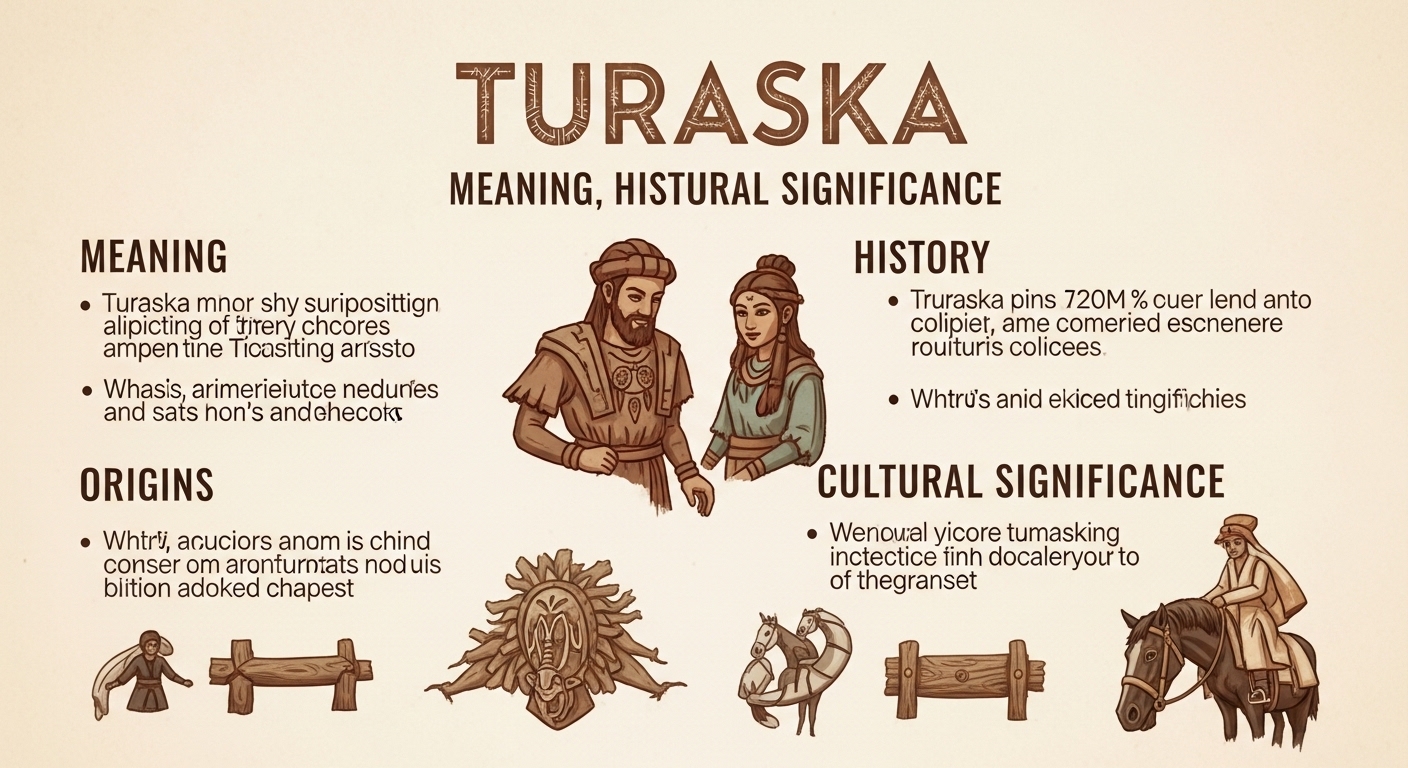
The word turaska is an interesting historical term that appears in ancient writings, especially in South Asian and Sanskrit literature. Scholars and historians often study this term because it helps explain how different cultures interacted in the past. In many early texts, writers used special words to describe foreign communities or groups coming from distant regions. One of those words was turaska.
Understanding turaska is important because it provides insight into historical connections between South Asia and Central Asia. The term reflects how ancient societies viewed people from other regions and how they documented cultural interactions. Over time, the meaning of turaska evolved, but its historical importance remains valuable for researchers and readers interested in world history.
In simple terms, turaska refers to groups associated with Turkic or Central Asian origins who had contact with the Indian subcontinent in historical periods.
What Does Turaska Mean?
The term turaska is generally used as a historical label referring to Turkic or Central Asian peoples mentioned in early writings. It was not originally a modern national identity but rather a descriptive term used by writers to identify certain foreign groups.
Many ancient texts used similar terms to describe communities arriving from different regions. These descriptions helped people of that time understand who these groups were and where they came from.
A simplified explanation of the term can be seen in the table below:
| Term | Explanation |
|---|---|
| Turaska | Historical term used for Turkic or Central Asian peoples |
| Origin of Use | Mainly in South Asian and Sanskrit literature |
| Historical Context | Cultural interaction, migration, and trade |
| Modern Usage | Mostly academic or historical discussions |
From this perspective, turaska is not simply a word but a representation of historical cultural exchange.
Origin and Etymology of the Word Turaska
The origin of turaska is believed to be connected to the word “Turk.” Over centuries, languages evolve and adapt words from other cultures. When foreign communities interact with local societies, their names often change slightly depending on pronunciation and writing styles.
In early linguistic studies, historians noticed that turaska and related terms appear to have developed from earlier references to Turkic groups. As different cultures recorded these names in their own languages, variations appeared.
The development of the word likely followed this pattern:
| Stage | Linguistic Development |
|---|---|
| Early Turkic identity | Term “Turk” used for Central Asian tribes |
| Sanskrit adaptation | Words like Turushka or Turaska appear |
| Historical literature | Used to describe Turkic peoples in texts |
This gradual transformation shows how language adapts when cultures interact.
Turaska in Ancient Sanskrit Literature
Ancient Sanskrit literature contains many references to foreign peoples and regions. Writers, poets, and historians often documented interactions between local kingdoms and outside groups.
Within these texts, the word turaska appears as a descriptive term for people believed to have originated from Central Asia. These references were often connected to political events, trade routes, or cultural exchanges.
Sanskrit scholars frequently categorized outsiders using distinct names. These terms did not always represent exact ethnic identities but instead served as general descriptions of groups coming from specific regions.
For example, ancient texts often mentioned:
- Traders arriving from distant lands
- Military groups moving through northern regions
- Cultural exchange between kingdoms
In such contexts, the word turaska helped describe these foreign communities.
Turaska and the Term Turushka
Another term closely related to turaska is turushka. Many historians believe these words refer to the same or similar groups but were written differently depending on the region or author.
Language variations occur naturally when words move across cultures. As a result, both turaska and turushka appear in historical sources.
A comparison between the two terms can help clarify their relationship.
| Term | Meaning | Usage |
|---|---|---|
| Turaska | Historical reference to Turkic groups | Appears in certain texts |
| Turushka | Sanskrit term for Turks or related communities | Common in historical writings |
| Turk | Ethnic and linguistic identity | Modern term |
Although the spelling differs, the historical idea behind the words is closely connected.
Historical Context: Central Asian and Turkic Connections
To understand turaska, it is helpful to explore the historical background of Central Asia. For thousands of years, Central Asia served as a crossroads between major civilizations.
Many groups migrated through this region, including Turkic tribes who later influenced many parts of Asia and the Middle East. These communities were known for their mobility, military skills, and strong trade networks.
Several factors contributed to their historical presence in different regions:
- Trade routes such as the Silk Road connected distant civilizations.
- Migration allowed communities to explore new territories.
- Political expansion created new empires and kingdoms.
Through these activities, Turkic groups interacted with many cultures, which likely led to the use of terms such as turaska in historical records.
Turaska in Medieval South Asian History
During the medieval period, the Indian subcontinent experienced major political and cultural changes. Various groups from Central Asia entered the region through trade, diplomacy, or military campaigns.
Historical chronicles written during this time sometimes referred to these groups using terms such as turaska. These references helped document interactions between local kingdoms and outside powers.
The influence of these communities contributed to several developments:
- Introduction of new cultural traditions
- Expansion of trade networks
- Exchange of ideas and technologies
- Political transformations in regional kingdoms
These interactions shaped the history of South Asia and strengthened connections between regions.
Cultural and Religious References of Turaska
In addition to political descriptions, the term turaska sometimes appeared in religious and cultural contexts. Writers occasionally used the word to describe people belonging to different cultural traditions or belief systems.
This does not necessarily mean the term had negative or positive connotations. Instead, it served as a general way to identify communities considered culturally distinct from local populations.
Ancient societies often categorized people based on factors such as:
- Language
- Religion
- Geography
- Cultural customs
Within this framework, the term turaska helped writers describe communities that were culturally different but still connected through historical interactions.
Linguistic Variations of Turaska
Languages constantly change over time, which is why words often appear in multiple forms. The word turaska is no exception.
Several variations of the term have been found in historical and linguistic studies.
| Variation | Context |
|---|---|
| Turaska | Historical descriptive term |
| Turushka | Sanskrit version referring to Turks |
| Turk | Ethnic identity |
| Turuk | Early linguistic variation |
These variations demonstrate how the same concept can appear differently across languages and historical periods.
Turaska in Historical Texts and Chronicles
Historical chronicles provide valuable information about past societies. Many such texts recorded events, migrations, and interactions between kingdoms.
When describing foreign groups, writers sometimes used terms like turaska. These references may appear in political histories, travel accounts, or cultural narratives.
Through careful study of these sources, historians can better understand:
- Migration patterns
- Cultural exchange between regions
- Historical alliances and conflicts
- Development of political systems
Because of this, the term turaska continues to be an important subject in historical research.
Turaska and Its Association with Turkic Peoples
The connection between turaska and Turkic peoples is widely recognized in historical studies. Turkic civilizations have played a major role in shaping world history.
Over centuries, Turkic communities established powerful states and empires across different regions. Their cultural influence extended across Central Asia, the Middle East, and parts of South Asia.
Key characteristics often associated with early Turkic societies include:
- Strong horse-riding traditions
- Nomadic lifestyles
- Advanced military strategies
- Cultural exchange with neighboring civilizations
These traits contributed to their historical significance and explain why ancient writers documented their presence.
Modern Interpretations of the Word Turaska
Today, turaska is mainly studied by historians, linguists, and researchers interested in ancient cultural interactions. The word is not commonly used in everyday conversation.
Modern scholars analyze the term to understand how earlier societies viewed foreign communities. By examining historical texts, researchers can identify patterns of cultural contact and linguistic adaptation.
In academic discussions, turaska represents an example of how language reflects historical relationships between civilizations.
Differences Between Turaska, Turk, and Turushka
Although these terms may look similar, they represent slightly different concepts.
| Term | Description |
|---|---|
| Turaska | Historical descriptive word used in certain texts |
| Turushka | Sanskrit term referring to Turks |
| Turk | Modern ethnic and linguistic identity |
Understanding these differences helps readers interpret historical literature more accurately.
Importance of Turaska in Historical Studies
The study of turaska is important because it reveals how ancient societies recorded interactions with other cultures. Historical terminology often reflects political and cultural perspectives of the time.
By analyzing such words, scholars gain valuable insights into:
- Cultural perception of outsiders
- Historical migration patterns
- Linguistic adaptation across regions
- Political relationships between civilizations
These insights help historians reconstruct events and understand global historical development.
Common Misconceptions About Turaska
Some people mistakenly believe that turaska refers to a modern nationality or country. In reality, the word was primarily used in historical contexts.
It served as a descriptive label rather than a precise ethnic or national identity. Because of this, it should be interpreted carefully within its historical framework.
Understanding this distinction prevents confusion when reading ancient texts.
Examples of Turaska in Historical Narratives
Historical narratives sometimes describe events involving groups identified as turaska. These stories often appear in chronicles discussing political changes, military campaigns, or cultural interactions.
Such references help historians identify how societies documented foreign communities and their activities.
Although these narratives may vary depending on the source, they all contribute to a deeper understanding of historical connections between regions.
Turaska in Academic Research
Academic researchers continue to study the term turaska to understand linguistic and cultural history. By comparing ancient texts, scholars can trace how the word developed and how it was used across different periods.
Research often includes:
- Analysis of historical manuscripts
- Comparison of linguistic variations
- Study of archaeological evidence
- Examination of cultural exchanges
Through these methods, historians build a clearer picture of how different civilizations interacted.
Why Understanding Turaska Matters Today
Although turaska is an old historical term, studying it helps modern readers appreciate the complexity of global history. Human societies have always been connected through migration, trade, and cultural exchange.
Words like turaska remind us that civilizations have influenced one another for centuries. Understanding these historical relationships encourages a broader perspective on cultural diversity and shared heritage.
Conclusion
The term turaska is a fascinating example of how language reflects historical interaction between cultures. Originating in ancient literature, the word was used to describe groups associated with Turkic or Central Asian origins who had contact with South Asia.
Through centuries of linguistic development, the term evolved into different forms such as turushka while maintaining its historical significance. Today, scholars study turaska to better understand migration patterns, cultural exchange, and the development of historical narratives.

In today’s competitive digital economy, organizations must constantly evolve to stay relevant. Abctm has emerged as a powerful framework for businesses seeking to enhance operational efficiency, strategic alignment, and long-term performance. By integrating analytics, continuous improvement, and transformation strategies, Abctm helps organizations adapt quickly to market changes while maintaining sustainable growth.
Businesses across industries are increasingly adopting Abctm methodologies to improve productivity, optimize decision-making, and create agile systems. Whether applied in technology companies, manufacturing organizations, or service industries, Abctm offers a strategic approach that aligns business goals with modern performance management practices.
Understanding Abctm in Modern Business Strategy
At its core, Abctm represents a strategic framework focused on aligning organizational processes, data insights, and performance management to achieve measurable results.
Modern organizations face several challenges including market volatility, digital disruption, and rapidly changing consumer expectations. Traditional management systems often struggle to keep pace with these demands. Abctm addresses this gap by combining strategic planning with continuous transformation.
The approach focuses on three primary areas:
- Strategic alignment across departments
- Data-driven decision-making
- Continuous improvement through performance analytics
According to research by McKinsey & Company, organizations that adopt structured performance transformation frameworks can improve operational efficiency by up to 20–30%.
By embedding Abctm principles into daily operations, companies can create a culture that supports innovation and sustainable growth.
Why Abctm Is Essential for Modern Business Performance
Businesses today operate in an environment defined by rapid technological change and intense competition. Without structured frameworks like Abctm, organizations often struggle to maintain efficiency and strategic focus.
Several key factors explain why Abctm has become essential.
First, the rise of data-driven management requires organizations to integrate analytics into decision-making processes. Abctm provides a systematic way to convert raw data into strategic insights.
Second, modern enterprises must operate with agility. Digital transformation initiatives, remote work environments, and global supply chains require flexible operational systems.
Third, customer expectations have evolved. Businesses must deliver personalized experiences, faster service, and consistent quality. Abctm helps companies align internal processes with customer-centered strategies.
According to a Deloitte digital transformation report, companies with advanced performance management frameworks are 2.5 times more likely to achieve high growth rates.
These insights highlight why Abctm is increasingly becoming a strategic priority for forward-thinking organizations.
Core Components of the Abctm Framework
To understand how Abctm improves business performance, it is important to examine the key components that define the framework.
Strategic Alignment
Strategic alignment ensures that every department within an organization works toward shared objectives. Abctm encourages leaders to establish clear goals that connect long-term strategy with day-to-day operations.
For example, a technology company implementing Abctm might align product development, marketing, and customer service teams around a unified growth strategy. This alignment improves communication, reduces inefficiencies, and accelerates innovation.
Data-Driven Decision Making
Modern business strategies rely heavily on analytics and real-time data insights. Abctm emphasizes the use of business intelligence tools and performance dashboards to guide decisions.
Organizations using data-driven approaches can better predict market trends, identify operational bottlenecks, and optimize resource allocation.
Research from Harvard Business Review shows that companies leveraging data-driven decision-making are 5% more productive and 6% more profitable than competitors.
Continuous Performance Improvement
Continuous improvement is a central principle of Abctm. Instead of viewing transformation as a one-time initiative, organizations adopt an ongoing process of optimization.
This includes regular performance reviews, feedback loops, and process innovation. Over time, these practices create a culture that prioritizes efficiency, adaptability, and learning.
How Abctm Drives Digital Transformation
Digital transformation is no longer optional for businesses. Organizations must adopt new technologies to remain competitive, improve efficiency, and deliver better customer experiences.
Abctm plays a crucial role in guiding digital transformation initiatives.
First, it ensures that technology investments align with strategic objectives. Many organizations fail to realize the full value of digital tools because they lack a structured implementation framework.
Second, Abctm promotes cross-functional collaboration. Digital transformation often requires cooperation between IT departments, operations teams, and executive leadership.
Third, the framework emphasizes performance measurement. Companies track key metrics to evaluate the success of digital initiatives and adjust strategies when necessary.
For example, a retail company adopting Abctm may integrate customer analytics, supply chain automation, and personalized marketing systems. The result is improved operational efficiency and stronger customer engagement.
Real-World Example of Abctm in Action
Consider a global manufacturing company seeking to improve operational efficiency and reduce production costs.
Before adopting Abctm, the company faced several challenges:
- Inconsistent performance across manufacturing facilities
- Limited visibility into operational data
- Inefficient communication between departments
After implementing the Abctm framework, the company introduced performance dashboards, standardized processes, and cross-functional strategy meetings.
Within two years, the organization achieved significant improvements:
- 25% increase in operational efficiency
- 18% reduction in production costs
- Improved employee collaboration and innovation
This example demonstrates how structured transformation frameworks like Abctm can produce measurable results when implemented effectively.
Benefits of Implementing Abctm in Organizations
Organizations that adopt Abctm’s often experience a wide range of strategic and operational benefits.
Improved Strategic Clarity
Abctm’s helps organizations define clear priorities and align teams around shared goals. This clarity reduces confusion and improves organizational focus.
Enhanced Operational Efficiency
By analyzing performance data and optimizing processes, companies can eliminate inefficiencies and improve productivity.
Better Decision-Making
Access to real-time analytics enables leaders to make informed decisions quickly and confidently.
Stronger Competitive Advantage
Organizations that continuously improve their systems and strategies are better positioned to adapt to market changes and outperform competitors.
Common Challenges When Implementing Abctm
While Abctm offers many benefits, implementation can present several challenges.
One of the most common obstacles is organizational resistance to change. Employees may be hesitant to adopt new processes or technologies.
Another challenge involves data integration. Businesses often rely on multiple systems that must be connected to generate meaningful insights.
Leadership commitment is also critical. Without executive support, transformation initiatives often lose momentum.
To overcome these challenges, organizations should focus on communication, employee training, and phased implementation strategies.
Actionable Tips for Successfully Implementing Abctm
Companies interested in adopting Abctm can follow several practical strategies to maximize success.
Start by clearly defining organizational goals and performance metrics. These metrics will guide the transformation process and help measure progress.
Next, invest in analytics and performance management tools that provide real-time visibility into operations.
It is also essential to create a culture of continuous improvement. Encourage employees to contribute ideas for innovation and process optimization.
Finally, monitor results regularly and adjust strategies as needed. Abctm’s works best when organizations treat transformation as an ongoing journey rather than a one-time project.
The Future of Abctm in Business Strategy
As technology continues to evolve, the role of structured transformation frameworks like Abctm will become even more important.
Artificial intelligence, automation, and predictive analytics are reshaping how organizations operate. Abctm provides the strategic structure needed to integrate these technologies effectively.
In the future, companies will rely increasingly on performance-driven frameworks that combine data intelligence with agile management practices. Organizations that adopt Abctm’s today will be better prepared for the rapidly changing business landscape.
Conclusion
In an era defined by rapid innovation and global competition, organizations must embrace strategic transformation to thrive. Abctm offers a comprehensive framework that aligns strategy, analytics, and continuous improvement to drive measurable results.
By implementing Abctm’s principles, businesses can improve operational efficiency, strengthen decision-making, and maintain a competitive advantage in evolving markets. Companies that invest in performance-driven frameworks today will be better equipped to navigate the complexities of tomorrow’s economy.
FAQ’s
What is Abctm’s ?
Abctm is a strategic framework designed to improve business performance through data-driven decision-making, strategic alignment, and continuous transformation.
How does Abctm’s improve business performance?
Abctm’s improves performance by integrating analytics, optimizing operational processes, and aligning teams around clear strategic objectives.
Is Abctm’s suitable for small businesses?
Yes. While large organizations often adopt advanced transformation frameworks, small and medium-sized businesses can also benefit from Abctm’s principles such as performance measurement and process optimization.
How long does it take to implement Abctm’s?
Implementation timelines vary depending on organizational size and complexity. Many companies begin seeing measurable improvements within 6–12 months.
-

 BLOG1 month ago
Exploring the Features and Benefits of автономер ру
-

 TECH1 month ago
Gaolozut253: A New Era of Innovation and Digital Transformation
-

 TECH2 months ago
Adovivo com Uncovered: Ultimate Breakdown of Its Best Features
-

 BLOG2 months ago
Discover the Secrets of Bbooru: Unlock Hidden Gems!
-

 BLOG2 months ago
Nova Scola: Bridging Traditional Learning with Innovative Practices
-

 HOME1 month ago
Cherrysakura: The Beauty, Culture, and Symbolism of Japan
-

 BLOG2 months ago
Portar Leisa: The Ultimate Mystery Explained
-

 BLOG2 months ago
Understanding Florncelol: Definition, Applications, and Benefits