
BLOG
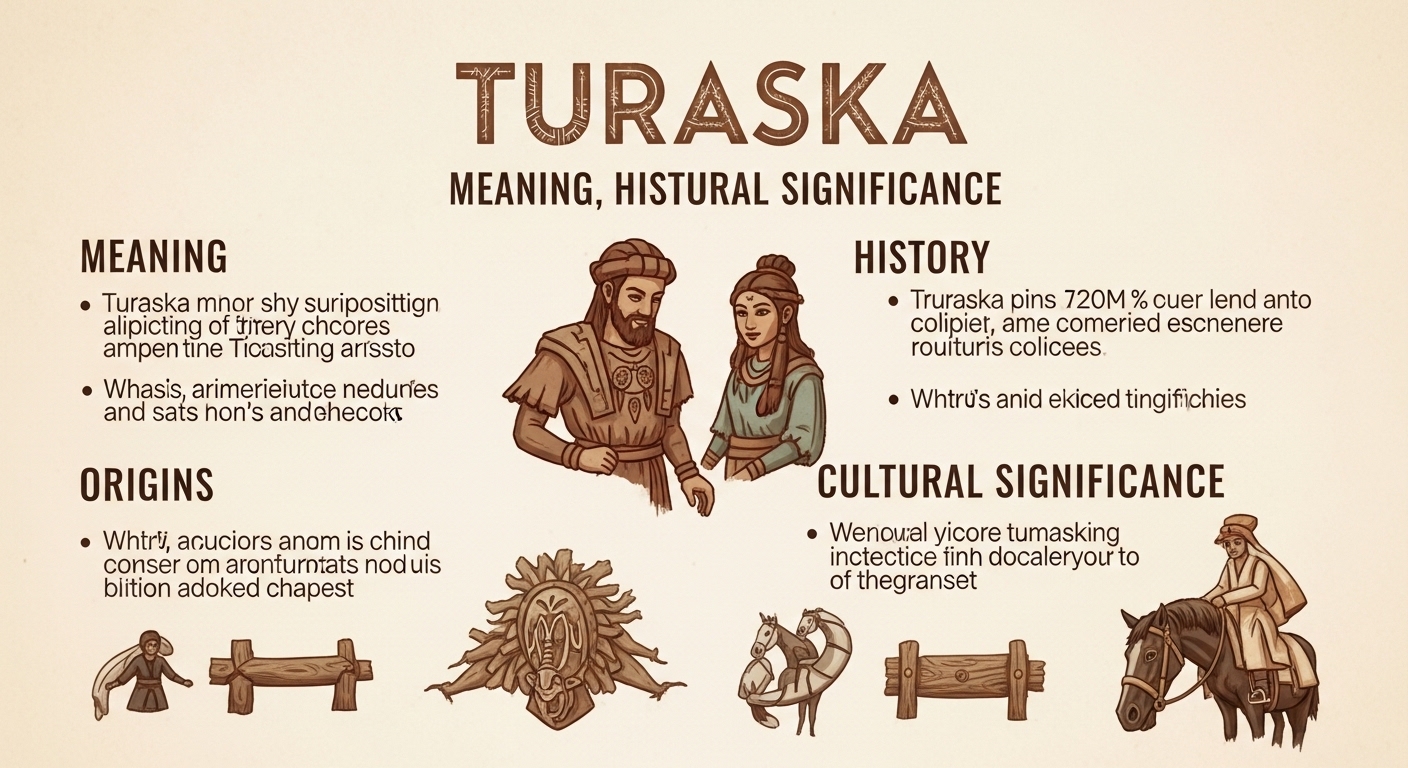
Turaska: Meaning, History, Origins, and Cultural Significance

Introduction
The word turaska is an interesting historical term that appears in ancient writings, especially in South Asian and Sanskrit literature. Scholars and historians often study this term because it helps explain how different cultures interacted in the past. In many early texts, writers used special words to describe foreign communities or groups coming from distant regions. One of those words was turaska.
Understanding turaska is important because it provides insight into historical connections between South Asia and Central Asia. The term reflects how ancient societies viewed people from other regions and how they documented cultural interactions. Over time, the meaning of turaska evolved, but its historical importance remains valuable for researchers and readers interested in world history.
In simple terms, turaska refers to groups associated with Turkic or Central Asian origins who had contact with the Indian subcontinent in historical periods.
What Does Turaska Mean?
The term turaska is generally used as a historical label referring to Turkic or Central Asian peoples mentioned in early writings. It was not originally a modern national identity but rather a descriptive term used by writers to identify certain foreign groups.
Many ancient texts used similar terms to describe communities arriving from different regions. These descriptions helped people of that time understand who these groups were and where they came from.
A simplified explanation of the term can be seen in the table below:
| Term | Explanation |
|---|---|
| Turaska | Historical term used for Turkic or Central Asian peoples |
| Origin of Use | Mainly in South Asian and Sanskrit literature |
| Historical Context | Cultural interaction, migration, and trade |
| Modern Usage | Mostly academic or historical discussions |
From this perspective, turaska is not simply a word but a representation of historical cultural exchange.
Origin and Etymology of the Word Turaska
The origin of turaska is believed to be connected to the word “Turk.” Over centuries, languages evolve and adapt words from other cultures. When foreign communities interact with local societies, their names often change slightly depending on pronunciation and writing styles.
In early linguistic studies, historians noticed that turaska and related terms appear to have developed from earlier references to Turkic groups. As different cultures recorded these names in their own languages, variations appeared.
The development of the word likely followed this pattern:
| Stage | Linguistic Development |
|---|---|
| Early Turkic identity | Term “Turk” used for Central Asian tribes |
| Sanskrit adaptation | Words like Turushka or Turaska appear |
| Historical literature | Used to describe Turkic peoples in texts |
This gradual transformation shows how language adapts when cultures interact.
Turaska in Ancient Sanskrit Literature
Ancient Sanskrit literature contains many references to foreign peoples and regions. Writers, poets, and historians often documented interactions between local kingdoms and outside groups.
Within these texts, the word turaska appears as a descriptive term for people believed to have originated from Central Asia. These references were often connected to political events, trade routes, or cultural exchanges.
Sanskrit scholars frequently categorized outsiders using distinct names. These terms did not always represent exact ethnic identities but instead served as general descriptions of groups coming from specific regions.
For example, ancient texts often mentioned:
- Traders arriving from distant lands
- Military groups moving through northern regions
- Cultural exchange between kingdoms
In such contexts, the word turaska helped describe these foreign communities.
Turaska and the Term Turushka
Another term closely related to turaska is turushka. Many historians believe these words refer to the same or similar groups but were written differently depending on the region or author.
Language variations occur naturally when words move across cultures. As a result, both turaska and turushka appear in historical sources.
A comparison between the two terms can help clarify their relationship.
| Term | Meaning | Usage |
|---|---|---|
| Turaska | Historical reference to Turkic groups | Appears in certain texts |
| Turushka | Sanskrit term for Turks or related communities | Common in historical writings |
| Turk | Ethnic and linguistic identity | Modern term |
Although the spelling differs, the historical idea behind the words is closely connected.
Historical Context: Central Asian and Turkic Connections
To understand turaska, it is helpful to explore the historical background of Central Asia. For thousands of years, Central Asia served as a crossroads between major civilizations.
Many groups migrated through this region, including Turkic tribes who later influenced many parts of Asia and the Middle East. These communities were known for their mobility, military skills, and strong trade networks.
Several factors contributed to their historical presence in different regions:
- Trade routes such as the Silk Road connected distant civilizations.
- Migration allowed communities to explore new territories.
- Political expansion created new empires and kingdoms.
Through these activities, Turkic groups interacted with many cultures, which likely led to the use of terms such as turaska in historical records.
Turaska in Medieval South Asian History
During the medieval period, the Indian subcontinent experienced major political and cultural changes. Various groups from Central Asia entered the region through trade, diplomacy, or military campaigns.
Historical chronicles written during this time sometimes referred to these groups using terms such as turaska. These references helped document interactions between local kingdoms and outside powers.
The influence of these communities contributed to several developments:
- Introduction of new cultural traditions
- Expansion of trade networks
- Exchange of ideas and technologies
- Political transformations in regional kingdoms
These interactions shaped the history of South Asia and strengthened connections between regions.
Cultural and Religious References of Turaska
In addition to political descriptions, the term turaska sometimes appeared in religious and cultural contexts. Writers occasionally used the word to describe people belonging to different cultural traditions or belief systems.
This does not necessarily mean the term had negative or positive connotations. Instead, it served as a general way to identify communities considered culturally distinct from local populations.
Ancient societies often categorized people based on factors such as:
- Language
- Religion
- Geography
- Cultural customs
Within this framework, the term turaska helped writers describe communities that were culturally different but still connected through historical interactions.
Linguistic Variations of Turaska
Languages constantly change over time, which is why words often appear in multiple forms. The word turaska is no exception.
Several variations of the term have been found in historical and linguistic studies.
| Variation | Context |
|---|---|
| Turaska | Historical descriptive term |
| Turushka | Sanskrit version referring to Turks |
| Turk | Ethnic identity |
| Turuk | Early linguistic variation |
These variations demonstrate how the same concept can appear differently across languages and historical periods.
Turaska in Historical Texts and Chronicles
Historical chronicles provide valuable information about past societies. Many such texts recorded events, migrations, and interactions between kingdoms.
When describing foreign groups, writers sometimes used terms like turaska. These references may appear in political histories, travel accounts, or cultural narratives.
Through careful study of these sources, historians can better understand:
- Migration patterns
- Cultural exchange between regions
- Historical alliances and conflicts
- Development of political systems
Because of this, the term turaska continues to be an important subject in historical research.
Turaska and Its Association with Turkic Peoples
The connection between turaska and Turkic peoples is widely recognized in historical studies. Turkic civilizations have played a major role in shaping world history.
Over centuries, Turkic communities established powerful states and empires across different regions. Their cultural influence extended across Central Asia, the Middle East, and parts of South Asia.
Key characteristics often associated with early Turkic societies include:
- Strong horse-riding traditions
- Nomadic lifestyles
- Advanced military strategies
- Cultural exchange with neighboring civilizations
These traits contributed to their historical significance and explain why ancient writers documented their presence.
Modern Interpretations of the Word Turaska
Today, turaska is mainly studied by historians, linguists, and researchers interested in ancient cultural interactions. The word is not commonly used in everyday conversation.
Modern scholars analyze the term to understand how earlier societies viewed foreign communities. By examining historical texts, researchers can identify patterns of cultural contact and linguistic adaptation.
In academic discussions, turaska represents an example of how language reflects historical relationships between civilizations.
Differences Between Turaska, Turk, and Turushka
Although these terms may look similar, they represent slightly different concepts.
| Term | Description |
|---|---|
| Turaska | Historical descriptive word used in certain texts |
| Turushka | Sanskrit term referring to Turks |
| Turk | Modern ethnic and linguistic identity |
Understanding these differences helps readers interpret historical literature more accurately.
Importance of Turaska in Historical Studies
The study of turaska is important because it reveals how ancient societies recorded interactions with other cultures. Historical terminology often reflects political and cultural perspectives of the time.
By analyzing such words, scholars gain valuable insights into:
- Cultural perception of outsiders
- Historical migration patterns
- Linguistic adaptation across regions
- Political relationships between civilizations
These insights help historians reconstruct events and understand global historical development.
Common Misconceptions About Turaska
Some people mistakenly believe that turaska refers to a modern nationality or country. In reality, the word was primarily used in historical contexts.
It served as a descriptive label rather than a precise ethnic or national identity. Because of this, it should be interpreted carefully within its historical framework.
Understanding this distinction prevents confusion when reading ancient texts.
Examples of Turaska in Historical Narratives
Historical narratives sometimes describe events involving groups identified as turaska. These stories often appear in chronicles discussing political changes, military campaigns, or cultural interactions.
Such references help historians identify how societies documented foreign communities and their activities.
Although these narratives may vary depending on the source, they all contribute to a deeper understanding of historical connections between regions.
Turaska in Academic Research
Academic researchers continue to study the term turaska to understand linguistic and cultural history. By comparing ancient texts, scholars can trace how the word developed and how it was used across different periods.
Research often includes:
- Analysis of historical manuscripts
- Comparison of linguistic variations
- Study of archaeological evidence
- Examination of cultural exchanges
Through these methods, historians build a clearer picture of how different civilizations interacted.
Why Understanding Turaska Matters Today
Although turaska is an old historical term, studying it helps modern readers appreciate the complexity of global history. Human societies have always been connected through migration, trade, and cultural exchange.
Words like turaska remind us that civilizations have influenced one another for centuries. Understanding these historical relationships encourages a broader perspective on cultural diversity and shared heritage.
Conclusion
The term turaska is a fascinating example of how language reflects historical interaction between cultures. Originating in ancient literature, the word was used to describe groups associated with Turkic or Central Asian origins who had contact with South Asia.
Through centuries of linguistic development, the term evolved into different forms such as turushka while maintaining its historical significance. Today, scholars study turaska to better understand migration patterns, cultural exchange, and the development of historical narratives.

The internet is awash with new online stores popping up every day, each vying for your attention and, ultimately, your money. Amidst this digital landscape, it’s crucial to be discerning and thoroughly investigate any unfamiliar website before making a purchase. Today, we’re taking a close look at ieandrhih.shop. This article will delve into various aspects of ieandrhih.shop, providing you with the information you need to make an informed decision about whether or not to engage with this online retailer. We’ll cover potential red flags, analyze website features, and discuss general best practices for safe online shopping.
What is ieandrhih.shop?
The first step in evaluating any online store is understanding what it claims to be. Does ieandrhih.shop present itself as a specialized boutique, a general merchandise retailer, or something else entirely? Look for an “About Us” section, a homepage description, and any statements regarding their business model. Be wary of vague or overly generic descriptions. A legitimate business will typically clearly articulate their purpose and target audience.
If ieandrhih.shop sells a specific type of product, assess whether the products align with the overall design and messaging of the site. For instance, a site selling high-end electronics should have a professional and sophisticated design, rather than a cluttered and amateurish one. Pay close attention to inconsistencies.
Website Analysis: Key Elements to Consider
A thorough examination of the ieandrhih.shop website itself is essential. Here are some critical aspects to analyze:
- Domain Registration Information: While not always a definitive indicator, investigating the domain registration can offer clues. You can use a “WHOIS” lookup tool (readily available online) to check the domain’s registration date, registrant information, and registrar. Recently registered domains, especially those with obscured or incomplete registrant details, can be a warning sign. However, remember that older domains can also be used for malicious purposes.
- Contact Information: A legitimate business will provide clear and accessible contact information. Look for a physical address, phone number, and email address. Verify the address using online mapping services. Test the phone number and email address to see if they are responsive. A lack of contact information or non-functioning communication channels are major red flags. Also, be suspicious if the contact information seems generic or redirects to a free email service.
- Security Certificate (SSL): Look for the padlock icon in the address bar of your browser. This indicates that the website has an SSL certificate, which encrypts data transmitted between your browser and the website server. While an SSL certificate is essential, it doesn’t guarantee legitimacy; it simply means the connection is secure. All legitimate e-commerce sites must have a valid SSL certificate. No certificate should be an immediate deal breaker.
- Website Design and Functionality: A professionally designed website typically indicates a more legitimate business. Look for a clean layout, easy navigation, clear product descriptions, and high-quality images. Poor grammar, spelling errors, and broken links can be signs of a rushed or unprofessional operation. Also, check if the site functions properly on different devices (desktop, mobile, tablet).
- Terms of Service and Privacy Policy: These documents outline the website’s rules and regulations, as well as how they handle your personal information. Read these documents carefully (if they exist at all). Be wary of overly vague or generic terms, or if the privacy policy grants the website excessively broad rights to your data. The absence of these policies is a significant warning sign.
- Payment Options: Legitimate websites offer a variety of secure payment options, such as credit cards (Visa, Mastercard, American Express), PayPal, and other recognized payment gateways. Be cautious of websites that only accept less secure payment methods like wire transfers or cryptocurrency. The presence of recognized payment gateways enhances trust.
- Product Pricing: Compare the prices of products on ieandrhih.shop with prices on other reputable websites. Unrealistically low prices can be a lure for scams. If a deal seems too good to be true, it probably is.
- Return Policy: Review the return policy carefully. A legitimate business will have a clear and fair return policy that allows you to return products for a refund or exchange within a reasonable timeframe. The absence of a return policy, or a highly restrictive one, is a cause for concern.
Investigating Online Reviews and Reputation
Before making a purchase from ieandrhih.shop, take the time to research its online reputation. Search for reviews on independent review sites, consumer forums, and social media. Look for both positive and negative feedback. Pay attention to recurring themes in the reviews. Are there consistent complaints about product quality, shipping delays, customer service, or fraudulent activity?
- Use Search Engines: Search for phrases like “[ieandrhih.shop] reviews,” “[ieandrhih.shop] scam,” or “[ieandrhih.shop] complaints.”
- Check Consumer Protection Websites: Look for reports or warnings about ieandrhih.shop on websites of consumer protection agencies in your country or region.
- Beware of Fake Reviews: Be aware that some websites may post fake reviews to artificially inflate their ratings. Look for reviews that seem overly generic or lack specific details. Genuine reviews tend to be more balanced and include both positive and negative aspects.
- Social Media Presence: Check if ieandrhih.shop has a social media presence (Facebook, Instagram, Twitter). Examine their posts and engagement with followers. A lack of social media activity or a very low number of followers can be a warning sign. Also, see if customers are posting complaints on their social media pages.
Protecting Yourself While Shopping Online
Regardless of whether you choose to engage with ieandrhih.shop, it’s essential to practice safe online shopping habits:
- Use Strong Passwords: Create strong, unique passwords for all of your online accounts, including your email and shopping accounts. Use a password manager to store and generate strong passwords securely.
- Enable Two-Factor Authentication (2FA): Whenever possible, enable two-factor authentication for your online accounts. This adds an extra layer of security by requiring a code from your phone or another device in addition to your password.
- Keep Your Software Up to Date: Install the latest security updates for your operating system, web browser, and antivirus software.
- Be Wary of Phishing Emails: Be cautious of suspicious emails or links that ask for your personal information. Never click on links in emails from unknown senders.
- Use a Secure Payment Method: Use a credit card or PayPal when shopping online. These payment methods offer greater protection against fraud than debit cards or wire transfers.
- Monitor Your Accounts Regularly: Check your bank and credit card statements regularly for unauthorized transactions. Report any suspicious activity to your bank or credit card company immediately.
- Trust Your Gut: If something feels off about a website, trust your instincts and avoid making a purchase.
Conclusion
This article has provided a framework for evaluating ieandrhih.shop and other unfamiliar online retailers. Remember to thoroughly research the website, examine its features, and investigate its online reputation before making any purchases. If you encounter any red flags, such as a lack of contact information, unrealistic prices, or negative reviews, it’s best to err on the side of caution and avoid the site. Prioritize your online safety by practicing the tips outlined above to protect yourself from fraud and scams. Shopping online should be convenient and enjoyable, but it’s crucial to remain vigilant and prioritize your security. Always prioritize verified and well-known retailers.
The internet is a constantly evolving landscape, a breeding ground for new ideas, trends, and, sometimes, seemingly cryptic words. One such word that has been gaining traction recently is “Lavxndxtri.” If you’ve stumbled upon this term and found yourself scratching your head, wondering what it means, you’re not alone. This article aims to demystify Lavxndxtri, explore its potential origins, common uses, and offer insights into why it might be popping up in your online feeds.
What Exactly is Lavxndxtri?
The first hurdle in understanding Lavxndxtri is its unusual spelling. It deviates from common English orthography, hinting at a deliberate alteration or creation. A quick search reveals that it’s not a recognized word in any dictionary. This suggests that Lavxndxtri is either:
- A Neologism: A newly coined word, often specific to a particular community or subculture.
- A Misspelling: An unintentional or intentional misspelling of another word, potentially to avoid filters or censorship.
- A Code or Cipher: A deliberate substitution code used for privacy or exclusivity within a group.
- A Random String: A purely random arrangement of letters with no inherent meaning, perhaps used as a username or placeholder.
Given the lack of widely available information, it’s difficult to definitively determine the exact origin of Lavxndxtri. However, by analyzing its context and potential uses, we can start to form some informed hypotheses.
Exploring Potential Origins and Interpretations of Lavxndxtri
Without official documentation or a clear “Lavxndxtri” definition, we must rely on observation and deduction. Here are some potential avenues to explore:
1. A Misspelling or Alteration:
This is perhaps the most likely explanation. Let’s consider words that “Lavxndxtri” might be a variation of:
- Lavender: The most obvious connection is to the flower “lavender.” The “x” characters could be stylistic substitutions for vowels, a common practice in online slang and usernames. The “tri” could be an addition, perhaps signifying a group, a quantity, or simply adding a unique flair. Therefore, “Lavxndxtri” could represent something associated with lavender, such as tranquility, relaxation, or a particular aesthetic.
- Luxury: The “lv” in “Lavxndxtri” resembles the beginning of “luxury.” The subsequent letters could be intentional distortions to create a unique identifier. This suggests a potential association with high-end goods, experiences, or a desire for such things.
- Landry: While less likely, it is possible it is related to someone with the name Landry. The additions of the “x” characters are still unexplained, but could serve as a stylistic alteration.
2. A Neologism Within a Specific Community:
It’s possible that Lavxndxtri has a defined meaning within a niche online community, such as a gaming group, fan forum, or social media circle. The meaning could be internal and specific to that group, acting as a shared code or inside joke. To understand this, you’d likely need to observe how the term is used within that community to infer its meaning from context.
3. A Username or Online Identity:
Many users create unique usernames or handles that don’t have inherent meaning. Lavxndxtri could simply be a chosen identifier for an individual across various online platforms. In this case, the term itself might not carry any specific significance beyond being associated with that particular user.
4. A Code or Cipher:
While less probable without evidence, Lavxndxtri could be a simple substitution cipher, where each letter represents another letter or symbol. Cracking this code would require analyzing patterns and frequencies within the text where Lavxndxtri appears.
Common Uses and Contexts of Lavxndxtri
To further decipher Lavxndxtri, it’s crucial to examine where it’s being used. Here are some potential contexts:
- Social Media: Look for hashtags or mentions of Lavxndxtri on platforms like Twitter, Instagram, and TikTok. Analyzing the surrounding content (images, videos, text) can offer clues about its meaning. Does it appear alongside specific aesthetics, trends, or topics?
- Gaming Communities: Is Lavxndxtri a username or clan name in online games? Observing how the term is used within the game environment might reveal its significance.
- Forums and Online Communities: Check if Lavxndxtri appears in forum discussions, Reddit threads, or Discord servers. Pay attention to the context in which it’s used and any explanations or definitions provided by other users.
- Online Stores and Marketplaces: Does Lavxndxtri appear in product names or descriptions on online stores? This could indicate a brand name, a product category, or a specific style.
By carefully examining the context in which Lavxn dxtri is used, you can begin to infer its meaning and purpose.
Why is Lavxndxtri Trending?
Even without a definitive meaning, the mere fact that you’re encountering Lavxndxtri suggests it’s gaining some level of popularity. Several factors could contribute to this:
- Novelty and Uniqueness: The unusual spelling and lack of clear meaning make Lavxndxtri stand out. This can attract attention and curiosity, leading to increased visibility.
- Community Adoption: If Lavxn dxtri has taken root within a specific online community, its use could spread as members adopt the term.
- Algorithmic Amplification: Social media algorithms often prioritize content that generates engagement, regardless of its inherent meaning. If Lavxn dxtri is being used in a way that sparks discussion or shares, it could be amplified by these algorithms.
- Brand Creation: It’s possible Lavxn dxtri is being intentionally promoted as a brand name or concept, even without a clear product or service associated with it yet. The ambiguity could be part of the marketing strategy, aiming to generate intrigue and anticipation.
The Future of Lavxndxtri: Trend or Fleeting Fad?
Whether Lavxndxtri becomes a lasting trend or fades into obscurity remains to be seen. Its future depends on several factors, including:
- Adoption and Evolution: Will Lavxn dxtri be embraced by a wider audience and evolve to take on new meanings?
- Community Ownership: Will a specific community claim Lavxn dxtri and give it a defined purpose?
- Commercialization: Will Lavxn dxtri be adopted by a brand or used to promote a product or service?
Only time will tell whether Lavxn dxtri becomes a lasting part of the online lexicon or simply a fleeting internet curiosity.
Conclusion
While the exact meaning of Lavxndxtri remains elusive, the search for its definition highlights the dynamic and ever-changing nature of the internet. From potential misspellings to community-specific codes, the possibilities are vast. By observing its usage, analyzing its context, and engaging in thoughtful deduction, we can begin to unravel the mystery of Lavxn dxtri and gain a deeper understanding of the online trends shaping our digital world. Perhaps you, the reader, will be the one to finally crack the code and define Lavxndxtri’s for the masses. The internet awaits!

Introduction
The term “Bntamnh E” appears unusual and does not match any widely recognized word, product, or established concept in academic, technological, or cultural references. Like many modern internet-style identifiers, it likely functions as a randomized or context-specific string rather than a standard dictionary term.
What Is “Bntamnh E”?
In most cases, a string like Bntamnh E can fall into one of these categories:
1. Random Identifier
It may be a system-generated code used for:
- User IDs
- Session tokens
- Database entries
- Temporary verification codes
These are often meaningless outside their system context.
2. Typographical or Encoded Text
It could also be:
- A mistyped phrase
- A shortened or corrupted string
- A placeholder used in testing or drafts
3. Online or AI-Generated Label
Sometimes such strings appear when:
- AI systems generate placeholder text
- Content is auto-tagged or anonymized
- Data is partially encrypted or masked
Possible Uses of Bntamnh E
Even though it has no confirmed meaning, similar strings are commonly used in:
1. Software Systems
- Tracking user activity
- Identifying database records
- Managing backend processes
2. Security and Authentication
- Temporary login tokens
- Verification codes
- Secure session identifiers
3. Data Processing
- Labeling datasets
- Indexing records
- Internal system references
4. Online Platforms
- Auto-generated usernames
- Hidden URLs or parameters
- System debugging references
Why Such Terms Appear Online
You might encounter strings like Bntamnh E due to:
- Copy-paste errors
- AI-generated content fragments
- Encrypted or shortened links
- Backend system logs exposed publicly
- Placeholder text in unfinished content
Is Bntamnh E Important or Meaningful?
👉 On its own, it does not carry any known meaning in language or technology.
Its significance depends entirely on where you saw it and how it was generated.
Without context, it should be treated as:
- Neutral text
- Non-informational string
- Possibly system-generated data
Should You Be Concerned?
In most cases: No.
However, caution is advised if:
- It appears in suspicious links
- It is associated with unknown downloads
- It is part of unexpected emails or messages
These could indicate automated or spam-related content.
FAQ’s
1. What does Bntamnh E mean?
It does not have a known meaning in language or technology.
2. Is it a word or a code?
It is most likely a random or system-generated code.
3. Where does Bntamnh E come from?
It may come from databases, AI systems, or accidental text generation.
4. Is it dangerous?
Not by itself. It only becomes a concern if linked to suspicious activity.
5. Can it be translated?
No, because it is not a structured word or known phrase.
6. Why do I see such strings online?
They often appear due to automation, coding systems, or content errors.
7. Should I interact with it?
No action is needed unless it is part of a known system or platform.
Conclusion
Bntamnh E is best understood as a non-standard, likely system-generated string with no fixed meaning. It may appear in digital systems, databases, or AI-generated content, but it does not represent a known concept, product, or idea.
-

 LIFESTYLE5 months ago
Discovering Springhillmedgroup.com: Your Go-to Source For Quality Healthcare
-

 BLOG6 months ago
Exploring the Features and Benefits of автономер ру
-

 LIFESTYLE5 months ago
A Comprehensive Guide To Saying Goodbye With Byebyecarta
-

 LIFESTYLE5 months ago
All You Need To Know About floret_joy
-

 LIFESTYLE5 months ago
Gathereco NZ: A Hub for Eco-Friendly Innovations
-

 LIFESTYLE5 months ago
Kniko Howard: An Insight into His Life and Career
-

 ENTERTAINMENT4 months ago
Sabung Ayam Borneo303: Complete Guide to Online Cockfighting Entertainment
-

 ENTERTAINMENT5 months ago
Fartypants21: The Emerging Trend in Digital Culture